Introduction
Kitchen sink clogs are a common household plumbing problem because food particles, grease, cooking oil, and other debris can gradually build up inside the drain. Even a small amount of buildup can restrict water flow and eventually cause the sink to drain slowly or stop draining altogether.
A blocked kitchen sink can quickly become an inconvenience, making it difficult to wash dishes, prepare food, or use the sink normally. If the blockage is ignored, standing water, unpleasant odors, leaks, and more serious drainage problems may develop.
If you’re wondering how to unclog a kitchen sink, this guide will walk you through practical methods for identifying the cause of the blockage, clearing minor clogs safely, and preventing future buildup. You’ll also learn when a stubborn or recurring clog may require professional drain cleaning.
Common Causes of Kitchen Sink Clogs

Kitchen sink clogs usually develop when materials accumulate inside the drain or pipes and gradually restrict water flow. Understanding the common causes can make it easier to prevent blockages and choose the appropriate way to clear them.
2.1 Grease and Cooking Oil
Grease and cooking oil can stick to the inside walls of plumbing pipes. As the residue accumulates, it can trap food particles and other debris, gradually narrowing the passage available for water.
Pouring cooking oil, melted fats, or grease down the kitchen sink can therefore contribute to stubborn blockages. Instead, allow used grease to cool and dispose of it using an appropriate household waste method.
2.2 Food Particles
Food particles are another common cause of kitchen sink clogs. Materials such as rice, pasta, coffee grounds, fibrous vegetables, and food scraps can accumulate inside the drain or combine with grease and other residue.
Using a sink strainer can help catch food particles before they enter the plumbing. Empty the strainer into the appropriate waste container rather than washing the collected debris down the drain.
2.3 Soap and Mineral Buildup
Soap residue can accumulate inside plumbing over time, particularly when it combines with grease and other debris. Hard-water minerals can also leave deposits on the inside of pipes and around drain components.
As buildup increases, the opening through which water flows can become progressively restricted. Regular cleaning of accessible drain components can help reduce this type of buildup.
2.4 Foreign Objects
Small objects can accidentally fall or be pushed into a kitchen sink drain. Items such as food packaging pieces, bottle caps, cleaning materials, or other unsuitable objects can become lodged in the plumbing.
Avoid putting non-food objects down the kitchen sink. If an object falls into the drain and can be safely reached without pushing it farther into the pipe, remove it carefully. A deeper or inaccessible obstruction may require professional removal.
2.5 P-Trap Buildup
The P-trap is the curved section of drainpipe located beneath the kitchen sink. It holds a small amount of water, which helps prevent sewer gases from entering the home.
The trap can also collect grease, food particles, sediment, and other debris. When enough material accumulates, it can restrict or completely block drainage.
If the P-trap is accessible and needs cleaning, place a bucket underneath it before disconnecting the connections because trapped water and debris may spill out. If the trap is difficult to remove, heavily corroded, or the blockage remains after cleaning, professional assistance may be appropriate.
Signs of a Clogged Kitchen Sink
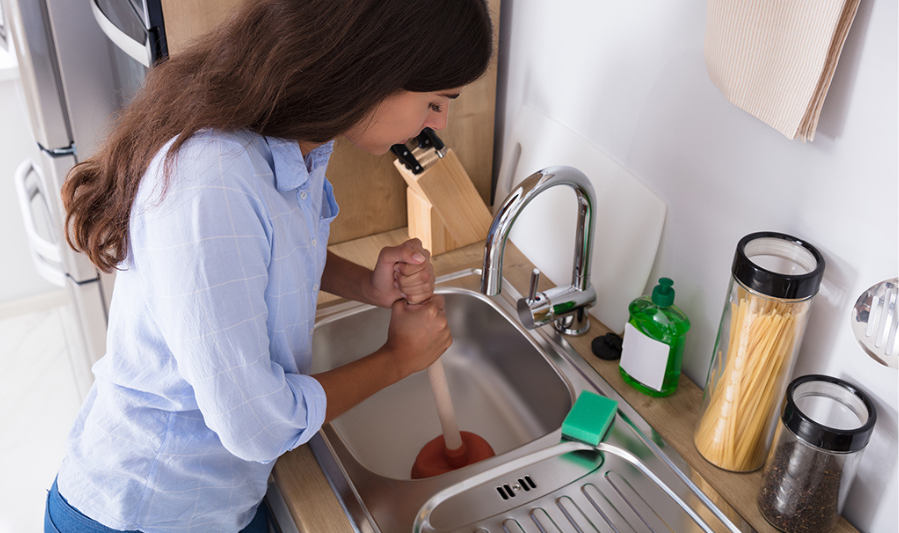
A kitchen sink may show several warning signs before the drain becomes completely blocked. Recognizing these symptoms early can make it easier to address the problem before standing water, odors, or plumbing damage develops.
Slow Drainage
Water that takes noticeably longer than usual to drain is often an early sign of buildup inside the drainpipe. Grease, food particles, soap residue, and mineral deposits can gradually restrict the flow of water.
Standing Water
Water that remains in the sink instead of draining normally indicates a more significant blockage. If plunging or other basic methods do not restore drainage, the obstruction may be deeper in the plumbing.
Gurgling Sounds
Gurgling or bubbling noises can occur when air becomes trapped or moves through partially blocked plumbing. If these sounds repeatedly occur while the sink is draining, they may indicate a developing clog.
Unpleasant Odors
Bad smells coming from the kitchen drain can result from trapped food particles, grease, or other organic material. Persistent odors may indicate buildup inside the drain or P-trap.
Water Backing Up
Water that backs up into the sink after running the faucet or using another connected fixture suggests that wastewater is having difficulty passing through the drain. If water backs up repeatedly, the blockage may require more thorough cleaning.
Frequent Recurring Clogs
A kitchen sink that repeatedly becomes clogged even after being cleared may have an underlying issue. Possible causes include persistent grease buildup, a partially blocked pipe, problems with the P-trap, or a deeper obstruction.
Recurring clogs should not simply be treated over and over with temporary solutions. If the problem continues, professional drain inspection may be necessary to identify and address the underlying cause.
Signs of a Clogged Kitchen Sink
A kitchen sink may show several warning signs before the drain becomes completely blocked. Recognizing these symptoms early can make it easier to address the problem before standing water, odors, or plumbing damage develops.
Slow Drainage
Water that takes noticeably longer than usual to drain is often an early sign of buildup inside the drainpipe. Grease, food particles, soap residue, and mineral deposits can gradually restrict the flow of water.
Standing Water
Water that remains in the sink instead of draining normally indicates a more significant blockage. If plunging or other basic methods do not restore drainage, the obstruction may be deeper in the plumbing.
Gurgling Sounds
Gurgling or bubbling noises can occur when air becomes trapped or moves through partially blocked plumbing. If these sounds repeatedly occur while the sink is draining, they may indicate a developing clog.
Unpleasant Odors
Bad smells coming from the kitchen drain can result from trapped food particles, grease, or other organic material. Persistent odors may indicate buildup inside the drain or P-trap.
Water Backing Up
Water that backs up into the sink after running the faucet or using another connected fixture suggests that wastewater is having difficulty passing through the drain. If water backs up repeatedly, the blockage may require more thorough cleaning.
Frequent Recurring Clogs
A kitchen sink that repeatedly becomes clogged even after being cleared may have an underlying issue. Possible causes include persistent grease buildup, a partially blocked pipe, problems with the P-trap, or a deeper obstruction.
Recurring clogs should not simply be treated over and over with temporary solutions. If the problem continues, professional drain inspection may be necessary to identify and address the underlying cause.
Can Baking Soda and Vinegar Unclog a Kitchen Sink?
Baking soda and vinegar are commonly suggested as a household method for dealing with minor kitchen sink drain buildup. The combination produces a fizzing reaction that may help loosen some light residue, but it is not a reliable solution for every type of blockage.
How the Method Works
A common approach is to put a small amount of baking soda into the drain and then add vinegar. The resulting reaction produces bubbles that can help disturb loose residue near the drain opening.
After allowing the mixture to work for a short period, the drain can be flushed with water. This method may be useful for light buildup or odors, but its effectiveness depends on the cause and location of the blockage.
What It May and May Not Accomplish
Baking soda and vinegar may help with minor residue and buildup, particularly near the accessible portion of a drain.
However, they are unlikely to reliably clear a stubborn blockage caused by:
- A large accumulation of grease
- Food debris lodged deeper in the pipe
- A foreign object
- A heavily blocked P-trap
- Tree roots or a deeper sewer-line obstruction
For significant blockages, mechanical methods such as a plunger, drain snake, or appropriate P-trap cleaning may be more effective.
When Mechanical Cleaning May Be Necessary
If the sink remains blocked after basic methods, mechanical cleaning can physically remove or break up the obstruction. A plunger can be useful for some localized clogs, while a drain snake may reach blockages farther inside the pipe.
If the blockage repeatedly returns, affects multiple drains, or cannot be cleared with basic methods, a professional plumber may need to inspect the drainage system.
Avoid Mixing Chemical Drain Cleaners
Never mix different chemical drain cleaners or combine commercial drain cleaners with other household chemicals. Some combinations can produce dangerous reactions or harmful fumes.
If a chemical drain cleaner has already been used, follow the product’s safety instructions and inform a plumber before they work on the drain. For many minor kitchen sink clogs, mechanical methods are a safer starting point than repeatedly using harsh chemical products.
Should You Use Chemical Drain Cleaners?
Chemical drain cleaners are widely marketed as a quick way to clear clogged kitchen sinks, but they are not appropriate for every blockage or plumbing system. Understanding their limitations and potential risks can help homeowners choose a safer approach.
Potential Benefits and Limitations
Chemical drain cleaners can sometimes break down certain types of organic buildup, such as grease or other residues. They may provide a convenient option for a minor, accessible blockage when used exactly according to the product instructions.
However, they may not remove physical obstructions such as foreign objects or heavily compacted debris. They also may not resolve recurring clogs caused by damaged, restricted, or poorly configured plumbing.
Risks to Plumbing Materials
Some chemical drain cleaners contain highly corrosive ingredients. Repeated or improper use may damage certain plumbing components, seals, or older pipes, particularly if the product is incompatible with the plumbing system.
A chemical cleaner also does not repair an underlying plumbing defect. If a pipe is already deteriorated or leaking, aggressive chemicals may make the situation more difficult to address.
Safety Concerns
Chemical drain cleaners can cause serious burns or eye and skin injuries if they are splashed or handled incorrectly. Some products can also release harmful fumes.
Always follow the manufacturer’s instructions, use the recommended protective equipment, and keep the product away from children and pets.
Never mix different drain cleaners or combine a drain cleaner with bleach, vinegar, ammonia, or other household chemicals. Dangerous chemical reactions or fumes can result.
Why Excessive Use Should Be Avoided
Repeatedly using chemical drain cleaners can mask a recurring plumbing problem rather than solve its underlying cause. If a sink keeps becoming blocked, the issue may involve grease buildup, a clogged P-trap, a deeper obstruction, or a restriction within the plumbing.
Frequent use can also increase exposure to corrosive chemicals and potentially damage plumbing components.
Safer Alternatives for Minor Clogs
For many minor kitchen sink clogs, mechanical methods are a useful first option. Depending on the situation, you can:
- Remove visible debris from the drain.
- Clean the drain stopper or strainer.
- Use a properly positioned plunger.
- Clean an accessible P-trap.
- Use an appropriate drain snake for a deeper blockage.
If these methods do not clear the clog, the blockage repeatedly returns, or multiple drains are affected, professional drain cleaning or inspection may be necessary.
How to Unclog a Kitchen Sink With a Garbage Disposal
A garbage disposal can contribute to kitchen sink blockages when food particles, grease, or other debris accumulate in the disposal or connected drainpipe. Because the unit contains sharp components and can start unexpectedly if improperly handled, safety should come first.
Turn Off the Disposal Safely
Before inspecting or cleaning the disposal, switch it off and disconnect its power supply. If the unit is plugged into an accessible outlet, unplug it. If it is hardwired or you cannot safely disconnect the power, turn off the appropriate circuit breaker.
Do not rely solely on the wall switch when working near the disposal.
Never Put Your Hands Inside the Disposal
Never reach your hand into a garbage disposal, even when you believe it is switched off. Internal components can cause serious injuries, and the unit may contain sharp objects or broken debris.
Use a flashlight to inspect the opening from a safe distance. If necessary, use an appropriate tool designed for the disposal and follow the manufacturer’s instructions.
You may also like to read these posts:
Common Plumbing Problems at Home: Causes, Solutions & Prevention Tips
Water Leaking From Pipes: Causes, Warning Signs & How to Fix It
Low Water Pressure Problems: Causes, Solutions & Prevention Tips
Clogged Drain Problems: Common Causes, Easy Fixes & Prevention Tips
Remove Accessible Debris Safely
If visible debris can be removed without placing your hands inside the disposal, use suitable tools such as tongs or pliers while the power remains disconnected.
Do not force objects deeper into the drain. After removing accessible debris, restore power only when all tools and objects have been removed and the area is safe.
If the disposal has a manufacturer’s reset feature or manual turning mechanism, follow the specific instructions provided for your model rather than improvising.
When Professional Service Is Needed
Professional help may be necessary when:
- The sink remains blocked after basic cleaning.
- The disposal will not operate after safe troubleshooting.
- The unit is leaking.
- A foreign object is lodged inside and cannot be safely removed.
- The clog appears to be farther down the drainpipe.
- Multiple drains are backing up.
- The disposal makes unusual noises or repeatedly jams.
Do not dismantle the disposal or work on its electrical connections unless you are appropriately qualified. If the blockage is persistent or involves the disposal, drainpipe, or electrical system, a qualified professional can safely identify the cause and make the necessary repair.
How to Prevent Kitchen Sink Clogs
Preventing kitchen sink clogs is usually easier than dealing with a stubborn blockage. Simple daily habits can reduce the amount of grease, food, and debris that enters the plumbing and help keep water flowing normally.
Use a Sink Strainer
Place a sink strainer over the drain to catch food particles and other debris before they enter the pipe. Empty the strainer into the trash or appropriate waste container regularly rather than rinsing the collected material down the drain.
Keep Grease and Oil Out of Drains
Avoid pouring cooking oil, grease, fats, or other greasy substances down the sink. These materials can stick to the inside of pipes and trap other debris.
Allow used grease to cool and dispose of it through an appropriate waste-disposal method.
Scrape Food From Plates
Remove leftover food from plates, pots, and pans before washing them in the sink. This is particularly helpful for materials that can expand, clump, or accumulate inside pipes, such as rice, pasta, coffee grounds, and fibrous food scraps.
Clean the Drain Regularly
Regularly clean the sink strainer, drain stopper, and other accessible components to remove accumulated residue. Keeping these areas clean can reduce the amount of material that enters the drainpipe.
If you notice that the sink is beginning to drain more slowly than usual, address the buildup early rather than waiting for a complete blockage.
Avoid Unsuitable Materials
Do not use the kitchen sink as a disposal point for non-food objects or materials that can damage or obstruct the plumbing. Keep items such as packaging, paper products, chemicals, and other unsuitable materials out of the drain.
Maintain the Garbage Disposal if Applicable
If your kitchen has a garbage disposal, follow the manufacturer’s maintenance and usage recommendations. Avoid putting grease, oil, hard objects, or unsuitable materials into the unit.
Keep the disposal and surrounding drain components clean, and address unusual noises, leaks, repeated jams, or persistent drainage problems promptly.
By controlling what enters the drain and addressing slow drainage early, homeowners can reduce the likelihood of recurring kitchen sink clogs and more serious drainage problems.
FAQS:
How do I unclog a kitchen sink quickly?
Start by removing visible debris and using a sink plunger. If the blockage remains, you can inspect the P-trap or use a suitable drain snake for a deeper clog.
What is the best way to unclog a kitchen sink?
The best method depends on the cause of the blockage. A plunger is a good first option for minor clogs, while cleaning the P-trap or using a drain snake may help with more stubborn blockages.
Can baking soda and vinegar unclog a kitchen sink?
Baking soda and vinegar may help with minor buildup and odors, but they may not remove stubborn clogs. Mechanical methods such as plunging or snaking are often more effective.
Why does my kitchen sink keep getting clogged?
Recurring clogs can be caused by grease, food particles, soap residue, P-trap buildup, or a deeper blockage in the drainage system. Improving disposal habits and addressing the underlying cause can help.
When should I call a plumber for a clogged kitchen sink?
Call a plumber if the sink remains blocked, the clog keeps returning, multiple drains are affected, water backs up, or basic unclogging methods do not solve the problem.
Conclusion
Knowing how to unclog a kitchen sink can help you handle minor blockages and keep your kitchen plumbing working properly. Start with simple methods such as removing visible debris, using a plunger, or cleaning the P-trap. Prevent future clogs by keeping grease, oil, and food waste out of the drain. If the blockage is severe, recurring, or affects multiple drains, professional plumbing assistance may be necessary.